


A busy factory gate at 7 AM. Dozens of vendors, contractors, truck drivers, and auditors all trying to enter at the same time. One security guard with a paper register. No ID check. No safety briefing. No way to know who is inside. This is the reality at thousands of manufacturing plants today, and it is a serious problem.
Manufacturing environments are very different from corporate offices. Workers deal with heavy machinery, hazardous chemicals, high-voltage equipment, and restricted production zones every single day. When unverified visitors enter these areas, the risks are not just operational. They can be life-threatening.
On top of safety concerns, compliance pressure is growing. Regulations such as ISO standards, and the Factory Act require plants to keep accurate visitor records, conduct safety inductions, and be audit-ready at all times. Manual registers simply cannot meet these requirements.
This is where a modern visitor management system for manufacturing industry makes a real difference. It automates check-in, tracks visitors in real time, ensures compliance, and protects people, assets, and intellectual property.
2. Understanding the Manufacturing Environment
2.1 Nature of Visitors in Manufacturing
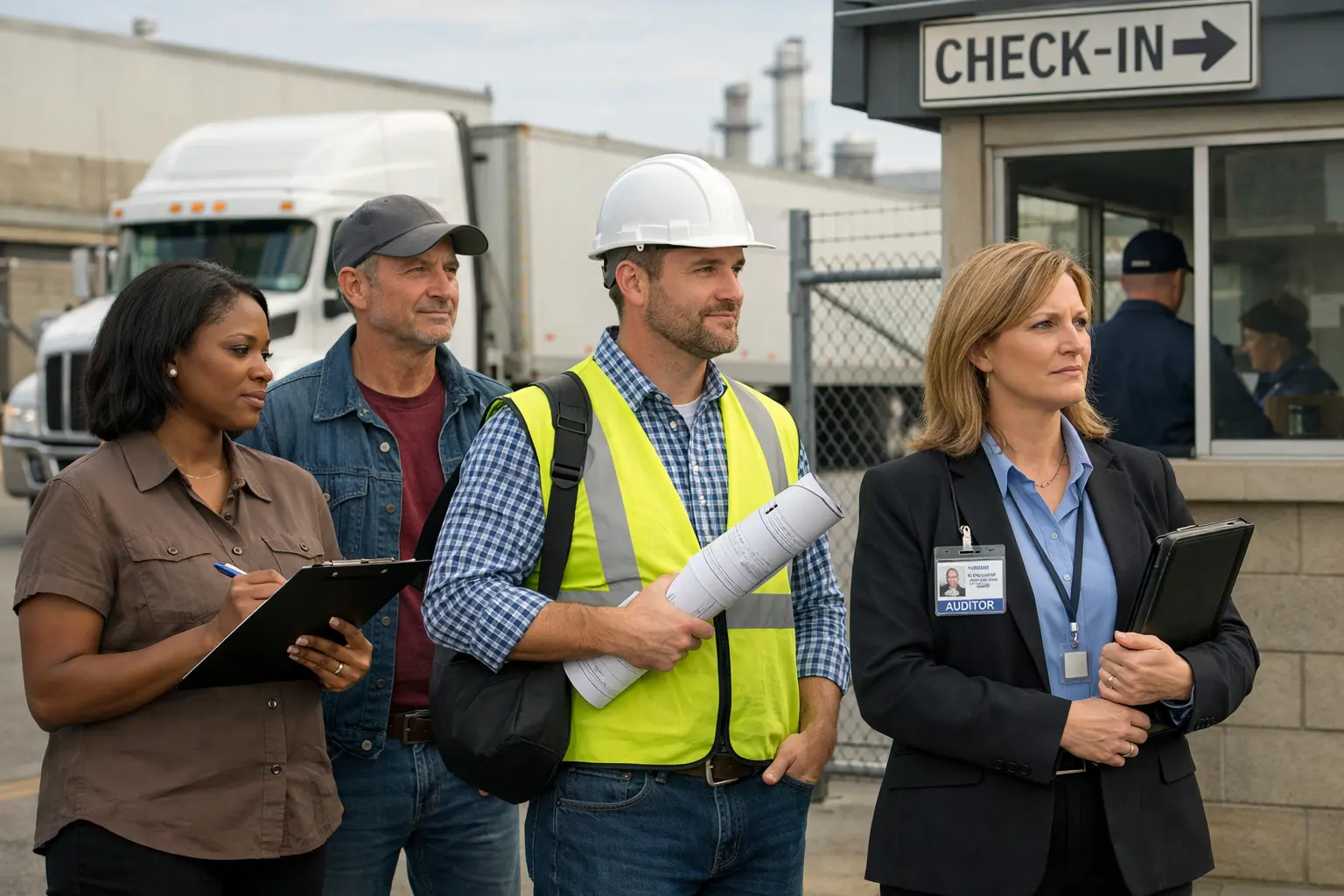
Manufacturing plants see a wide mix of visitors every single day. Understanding who enters is the first step toward managing them well.
- Vendors and raw material suppliers who deliver goods regularly
- Transporters and logistics personnel managing truck movement
- Contractors and maintenance staff performing scheduled or emergency work
- Auditors and government inspectors conducting compliance checks
- Job candidates attending interviews on-site
- Corporate guests, investors, and management visitors
2.2 Why Traditional Manual Registers Fail
Paper logbooks were never designed for the scale and complexity of modern manufacturing. Here is where they fall apart:
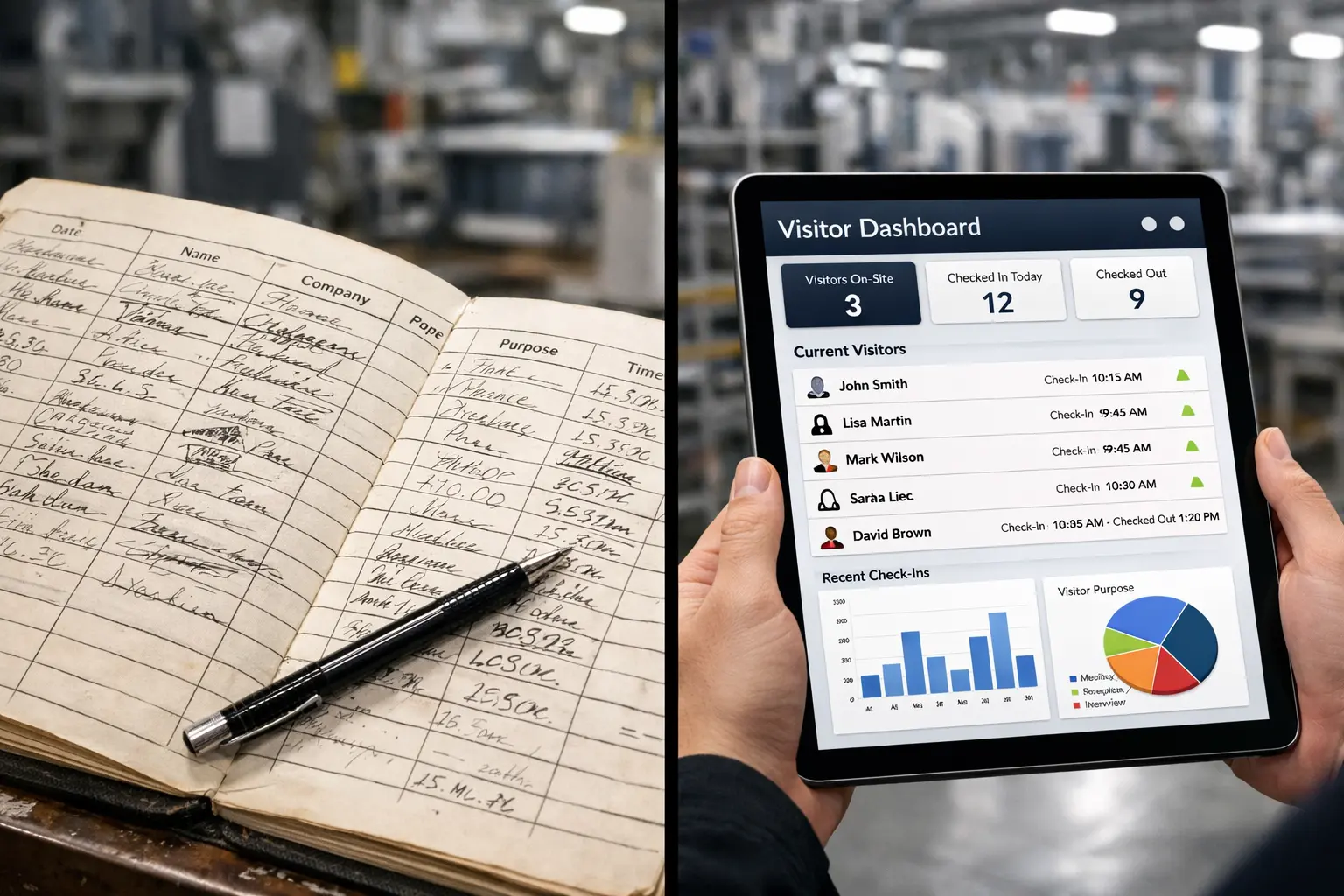
- Inaccurate data entry: Handwritten names and IDs are often illegible or wrong
- No real-time tracking: Security teams have no visibility into who is inside the plant
- Security loopholes: Visitors can bypass checks or reuse old badges
- No audit trail: Finding historical records during an audit is slow and unreliable
- Delayed emergency response: In a fire or accident, there is no way to quickly account for all visitors
3. Unique Challenges in Manufacturing Industry
3.1 High Security Requirements and Industrial Facility Security Management
Manufacturing plants deal with some of the most serious security risks in any industry. Restricted production zones contain proprietary processes, formulas, and machinery that competitors would pay a lot to access. Industrial facility security management must address risks like industrial espionage, unauthorized zone access, and theft of intellectual property. Without a proper factory gate entry system, these risks remain uncontrolled.
3.2 Safety and Compliance Regulations
Every visitor entering a plant must understand the risks. Workplace safety compliance regulations require mandatory safety briefings, PPE usage, and documented consent. OSHA compliance and ISO compliance manufacturing standards also require verifiable records of contractor licenses, insurance certificates, and induction completions. Missing any of these can result in heavy fines during audits.
3.3 High Volume of Daily Visitors
A mid-size plant can see 300 or more visitors on a single day. Shift-based operations bring workers at odd hours. Multiple vendor entries per day and peak-hour congestion at gates create bottlenecks. A factory visitor management solution must handle this volume without slowing down operations.
3.4 Multi-Gate and Multi-Location Complexity
Large plants often have separate entry points for employees, vendors, and trucks. Managing these independently while keeping centralized oversight is a major challenge. Multi-site plant visitor tracking through a cloud-based platform solves this by giving head-office teams full visibility across all locations.
3.5 Emergency Management and Evacuation Tracking
In a fire or chemical spill, knowing exactly who is inside a plant can save lives. Without a digital system, generating a real-time headcount is almost impossible. Visitor evacuation tracking and instant mustering reports are critical features that manual systems can never provide.
3.6 Vehicle and Material Movement Tracking
Truck entry and exit, e-way bill validation, and material dispatch all need to be logged and linked to gate passes.
4. Role of a Modern Visitor Management System in Manufacturing
4.1 Pre-Registration and Appointment Scheduling
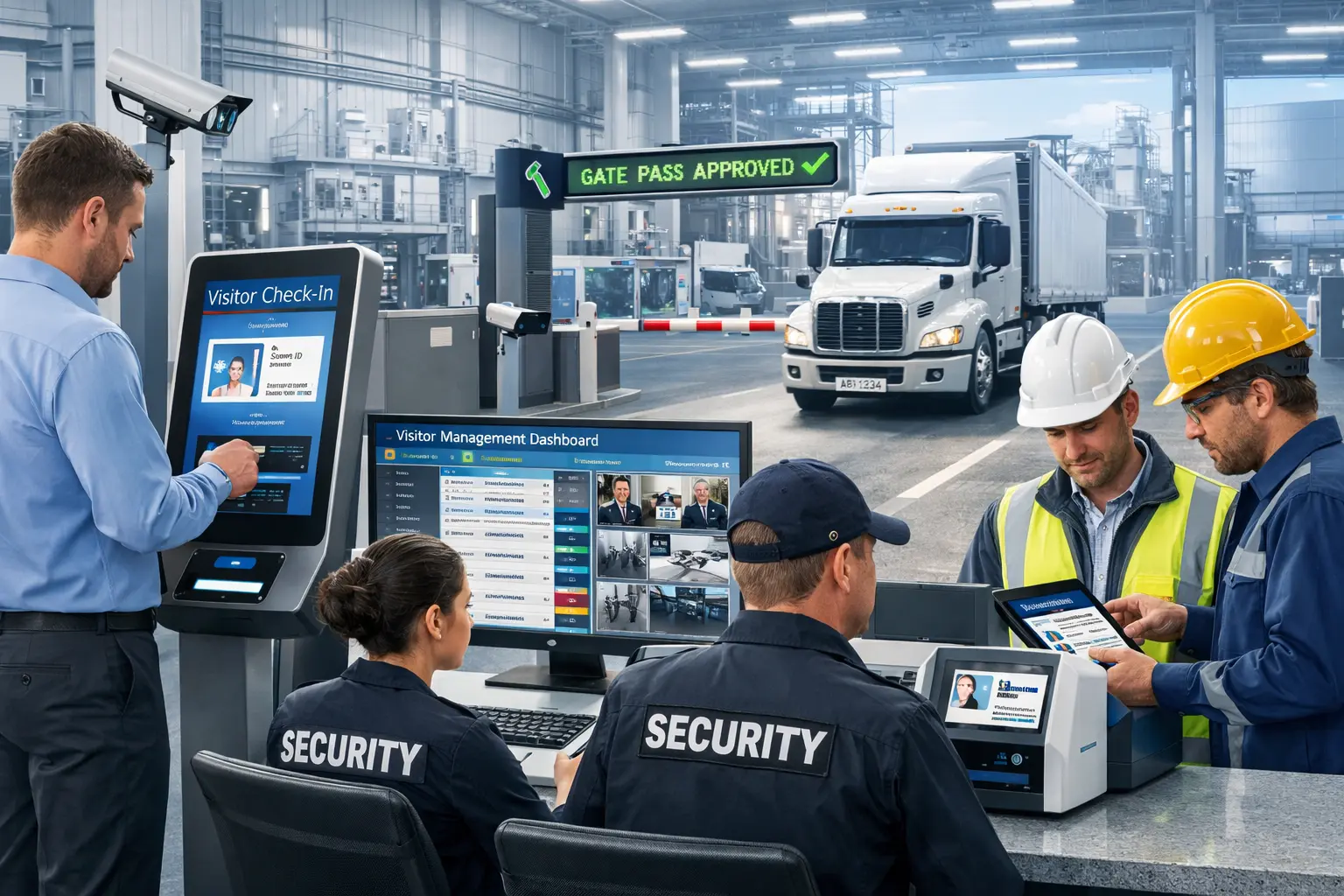
A good manufacturing visitor management software allows vendors to pre-register online before they arrive. This means approvals happen in advance, digital gate pass generation is automated, and waiting time at the gate drops significantly.
4.2 Digital ID Capture and Visitor Badge Printing
At check-in, the system captures ID documents and photos, verifies identity, and prints automated visitor badge printing instantly. Access validity can be set by zone and time, so visitors only go where they are allowed.
4.3 Real-Time Dashboard and Monitoring
Security managers get a live real time visitor tracking dashboard showing who is on-site, which department they are visiting, and how long they have been inside. Department-wise reports and audit-ready logs are available instantly.
4.4 Contractor and Document Verification
The system stores contractor licenses, insurance documents, and compliance certificate. This is core to contractor compliance management and reduces the risk of non-compliant vendors entering the plant.
4.5 Vehicle and Material Gate Pass Management
Truck number plates are captured on entry. Material inward and outward movement is logged and linked to the relevant gate pass management system entry.
5. Creative and Smart Solutions for Manufacturing Challenges
5.1 Contactless Check-In Systems
Post-pandemic, touchless check-in system options have become standard. Visitors scan a QR code on arrival, fill in their details on their phone, and receive a digital pass without touching any shared surface.
5.2 Integrated Security Ecosystem
A truly smart system connects with CCTV, biometric attendance, boom barriers, and RFID access control hardware. This creates a unified security management platform where all security data flows into one place, giving teams a complete picture of plant activity.
5.3 Multi-Plant Centralized Control
For companies with several factories, a cloud-based industrial visitor management system gives head-office teams consolidated reporting across all sites. Whether a visitor is entering a plant in Gujarat or Pune, the same rules, workflows, and data standards apply.
5.4 Emergency Evacuation Reports in Seconds
With one click, security teams generate a complete real-time evacuation muster list showing every person currently on-site.. This level of industrial emergency response is only possible with a digital system.
6. Benefits of Implementing VMS in Manufacturing
The business case for a digital visitor management system in manufacturing is very strong. Here is what plants gain:
- Improved plant security: Only verified, authorized visitors enter restricted zones
- Faster entry process: Pre-registered visitors clear the gate in under 30 seconds
- Compliance readiness: Audit logs, safety inductions are always available
- Reduced human errors: Automated data capture eliminates illegible or missing records
- Better vendor coordination: Supplier entry management becomes structured and trackable
- Enhanced brand image: A professional, digital reception creates a strong first impression
7. Real-World Use Case: Before and After VMS
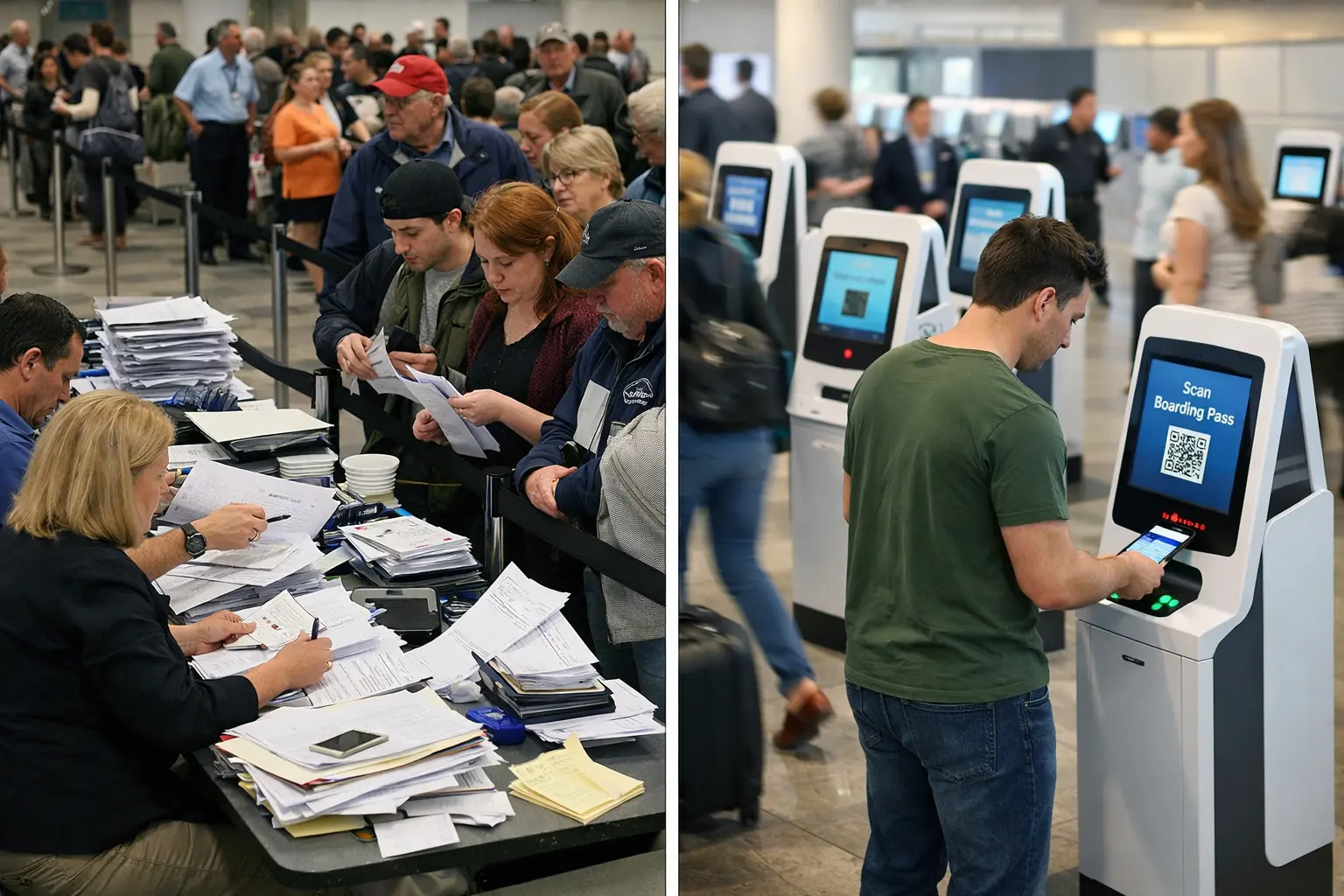
Consider a mid-size automotive components plant receiving over 300 vendor and logistics entries daily.
Before VMS: Guards maintained paper registers. Entry took 4 to 6 minutes per visitor. Safety briefings were skipped during rush hours. Audit teams had to sift through stacks of logbooks. During a fire drill, the plant could not confirm how many visitors were inside.
After implementing a plant visitor management system: Entry time dropped to under 45 seconds. Safety induction completion hit 100%. The first compliance audit after implementation passed without a single finding. During a mock evacuation drill, a complete visitor muster list was generated in 8 seconds.
8. Key Features to Look for in a Manufacturing-Focused VMS
Not all visitor management systems are built for industrial environments. Look for these capabilities:
- Multi-gate support for separate employee, vendor, and vehicle entry points
- Contractor compliance management with document upload and expiry alerts
- Real-time analytics and live dashboards
- Offline functionality for plants in low-connectivity areas
- Customizable workflows for different visitor types and zones
10. Conclusion: Manufacturing Needs More Than a Basic Visitor Log
A paper register is not a security strategy. Manufacturing plants face risks that are too serious, and compliance requirements that are too strict, to rely on outdated systems.
A specialized visitor management system for manufacturing industry brings together security, safety, and regulatory compliance software into one platform. It protects workers, guards intellectual property, satisfies auditors, and creates a professional experience for every guest who walks through the gate.
Investing in smart factory solutions for visitor management is not just a technology decision. It is a commitment to protecting your people, your assets, and your reputation. The question is not whether your plant needs a digital visitor management system. The question is how much longer you can afford to go without one.
